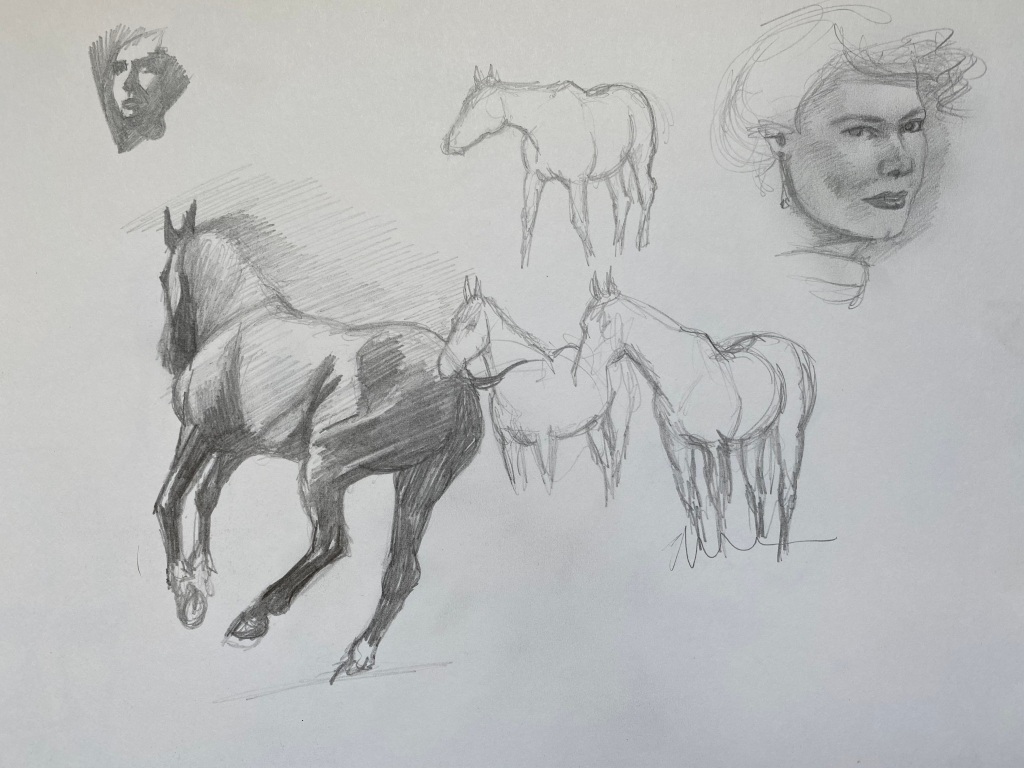
I was obsessed with drawing from an early age, especially horses. Out of the blue at a primary school medical, the district nurse said, ‘I hear you can draw a horse in three lines. Show me.’ At that she pushed a sheet of paper and a pencil across the desk. The three lines thing bothered me. You can’t draw a horse in three lines. I did my best then pushed the paper back to her.
Horses (not the drawing I gave to the nurse!)
My mother and grandmother conducted my upbringing. My father had almost nothing to do with it. The two matriarchs spent a lot of time worrying I would waste my life by taking up something inappropriate as a career – such as art or music. When you have ‘surgeon’s hands’ as my granny put it, you ought not to squander your gift playing the piano or doodling. ‘Very nice for a hobby dear, but not for a career,’ was a remark I heard frequently. Nevertheless a piano was bought and I was given art materials for birthdays and Christmases. I spent so much time playing the piano my mother would sometimes lock it.
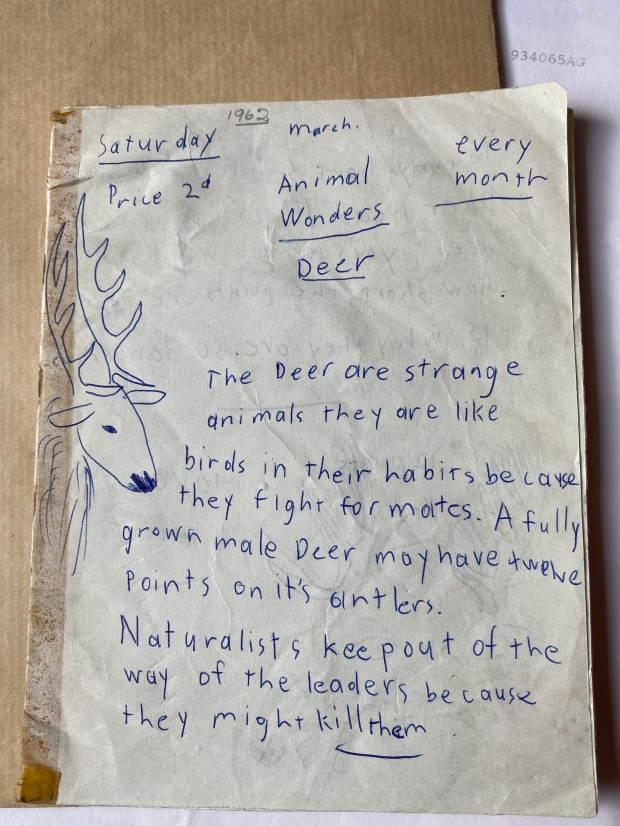
Animal Wonders – an early publication, aged eight. Priced competitively at 2d.
Compared with drawing I found painting much more difficult, particularly with colour-blindness lurking in the background. At school I would ask the girl next to me to tell me which crayon was the green one and which brown; then I would carefully place them on opposite sides of the desk. I always preferred drawing to painting.
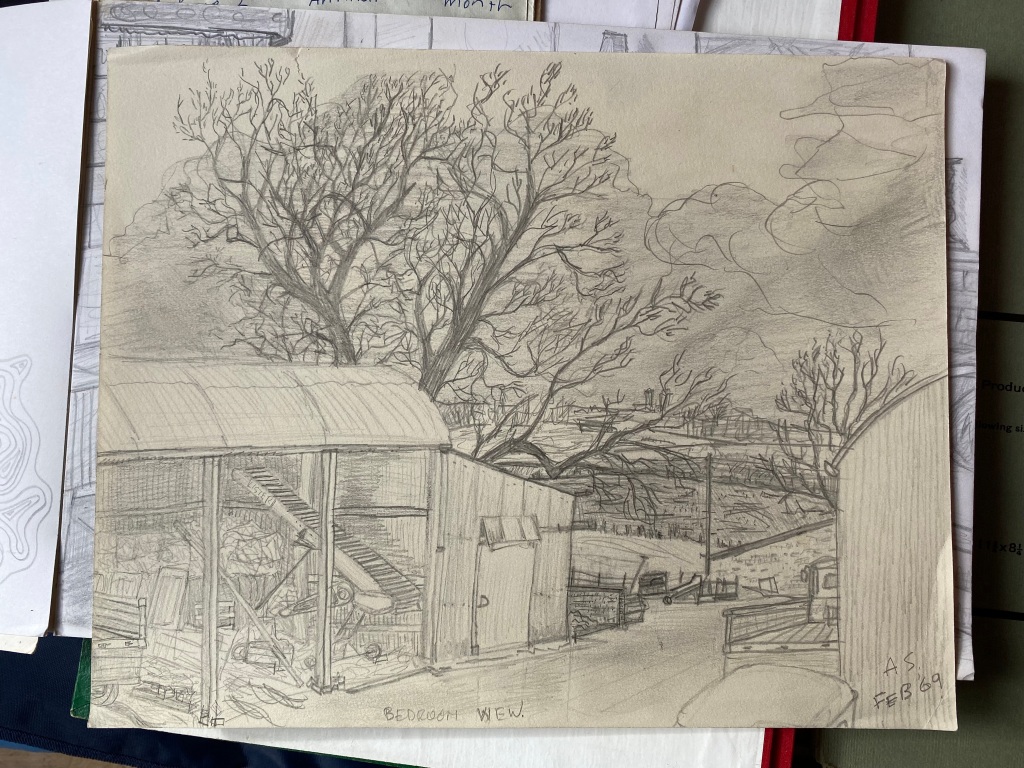
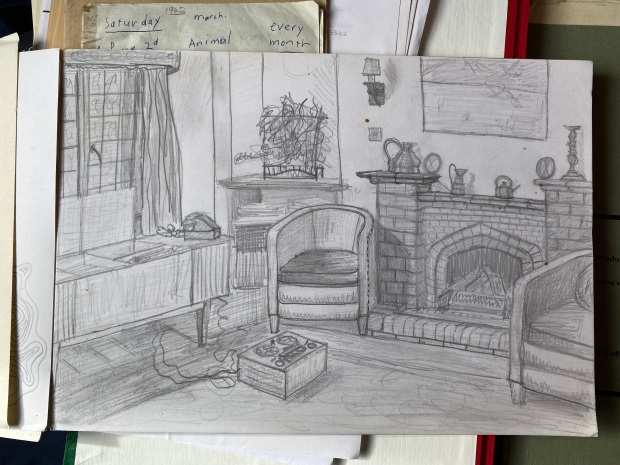
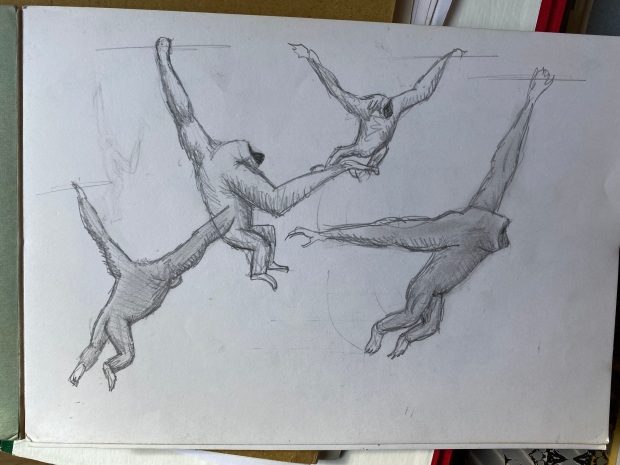
View from my bedroom window (aged 14). Home (aged 14).Funky gibbons
Before dropping art as a subject, I would sometimes get picked to take part in school art competitions. One of these was at the Kelvin Hall Museum in Glasgow. My mother packed the usual ham and egg sandwiches into a Tupperware box and off I went in the bus. I wandered around the museum looking for inspiration. I just couldn’t decide what to paint, and in the end I chose some stuffed mallards in a glass case. The result was appalling. I vividly recall my art teacher’s crestfallen expression as he asked me why on earth I’d picked that for a subject. I was ashamed of my ineptitude and began to think surgery sounded like the easier option.
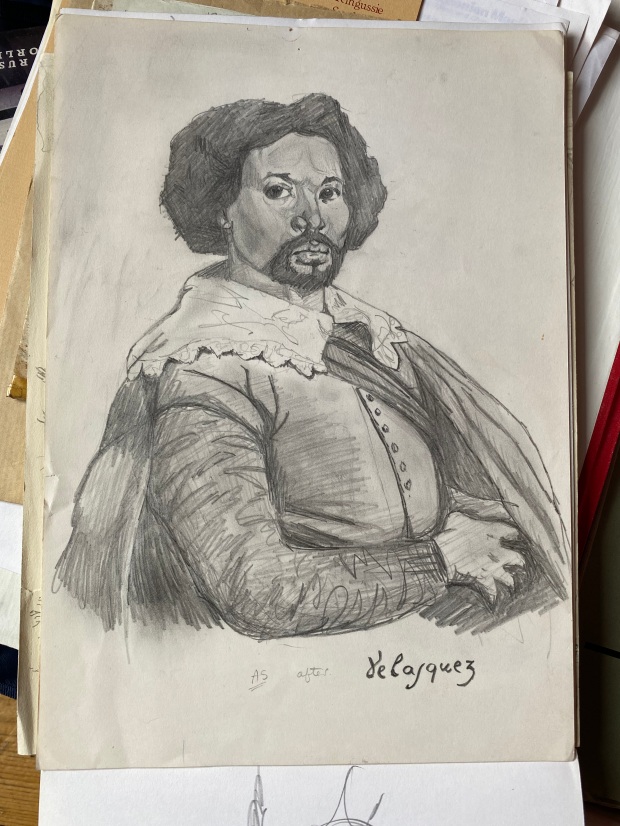
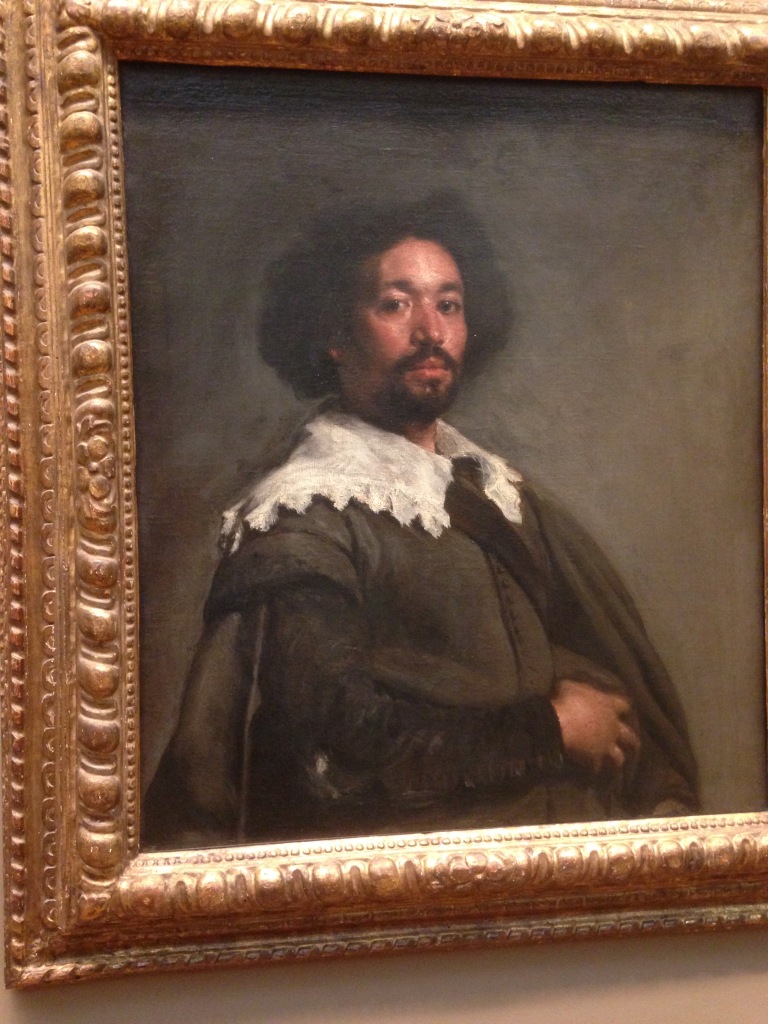
Even after I’d escaped the clutches of the Art Department I kept drawing. I had an interest in the work of Velasquez and Rodin and tried copying various images from books. Many years later on holiday in New York we were on a tour of the Metropolitan Museum conducted by a friend, Eyal. An artist himself, he did tours regularly with art students and visitors. I recounted my past efforts to him and mentioned copying Velasquez’s portrait of his assistant, Juan de Pareja.
‘You do know that’s here?’ he asked. I did not. A bell rang; the museum was closing. ‘Come on, I know where it is,’ he said, grabbing my arm. We ran up a staircase. The guard at the top held up a hand and said, ‘Gentlemen, we are closing.’ ‘I know,’ said Eyal, ‘We just want to see one picture.’ Skidding round a corner into a big first floor gallery, we arrived in front of the painting. It was surprisingly small, but so beautiful. I was thrilled.
Juan de Pareja with my generous acknowledgement to Velasquez (forged his signature)
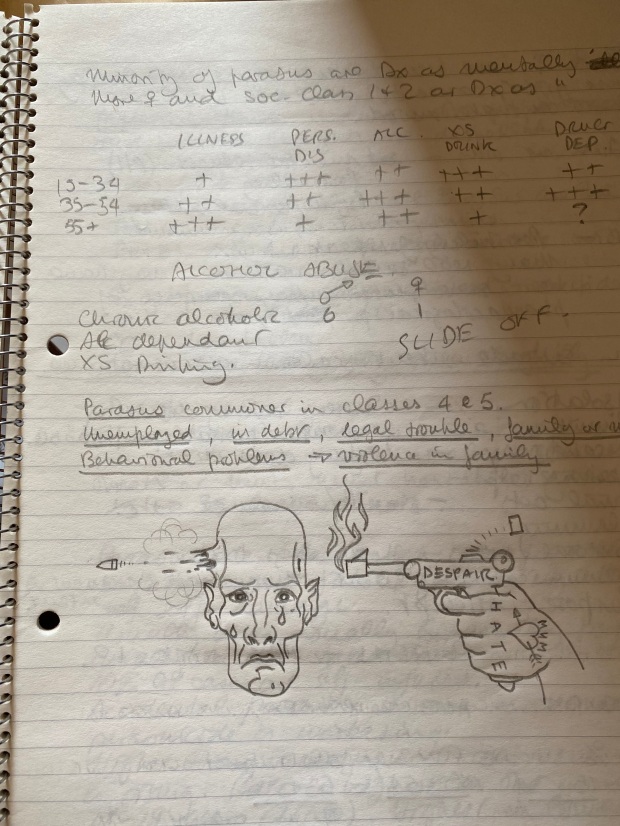
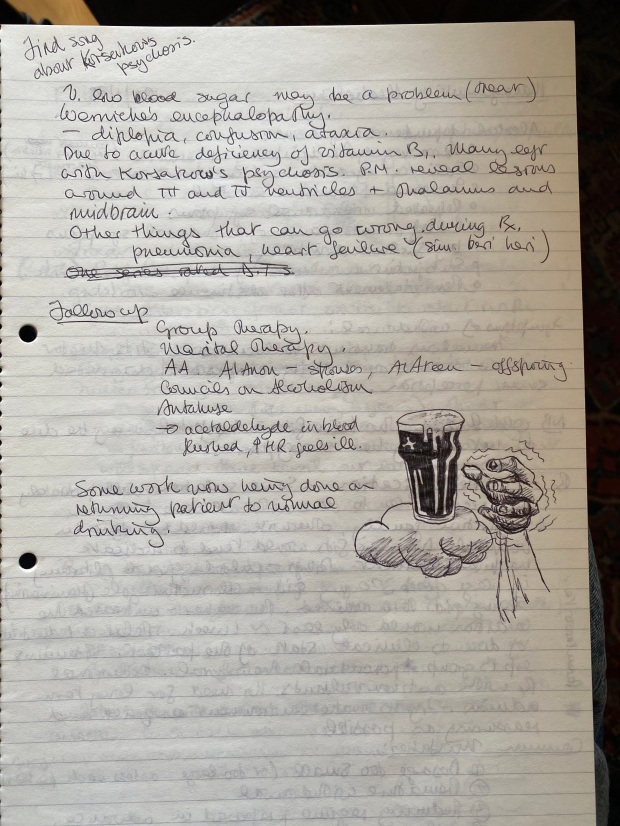
Later, at university I doodled during lectures – something I pursued compulsively for the rest of my career whenever I became bored in meetings or talks.
Lecture on parasuicide. …and one on alcoholism.
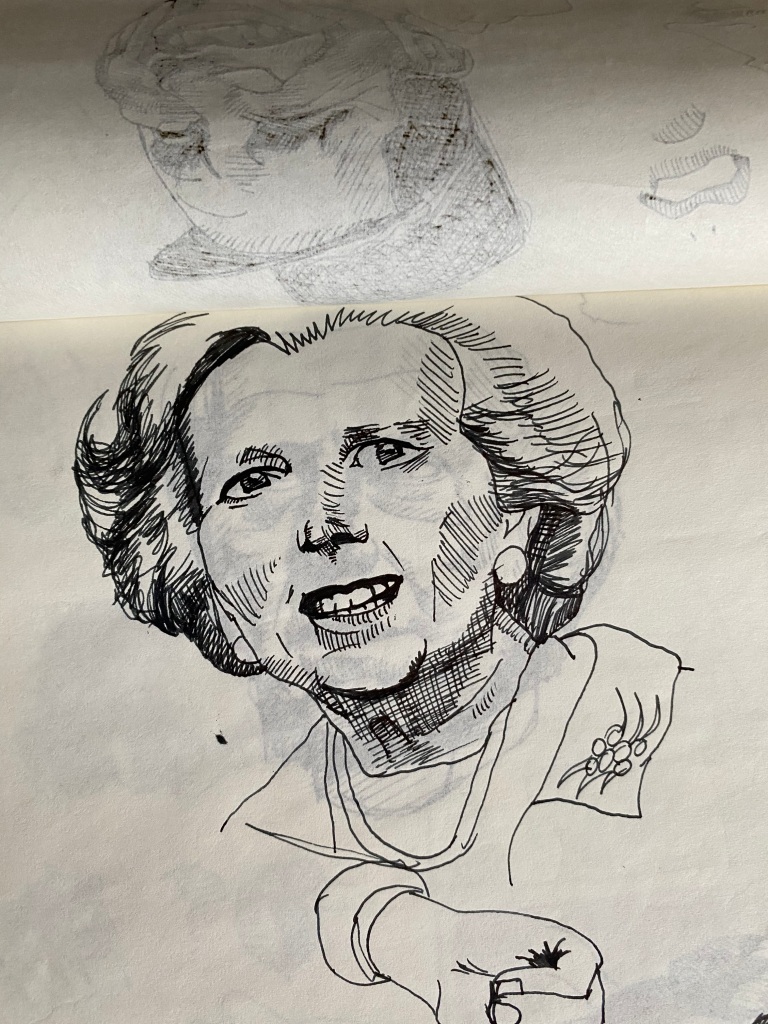
I occasionally drew illustrations for student magazines and toyed with cartooning.
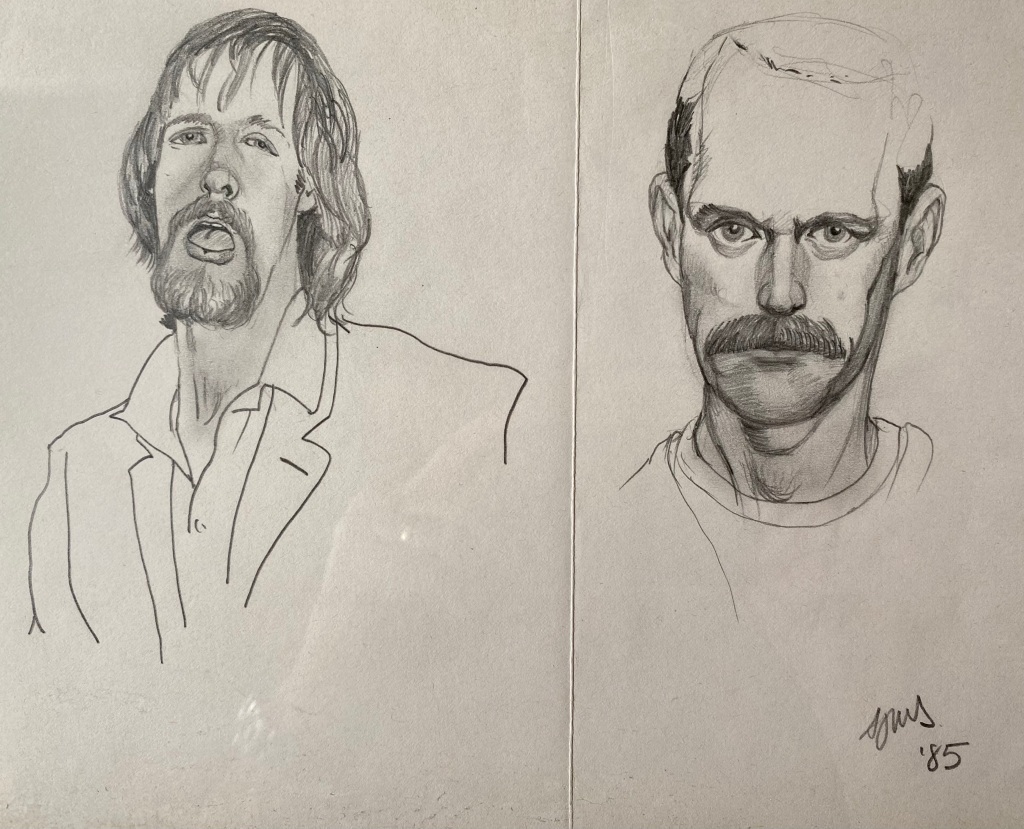
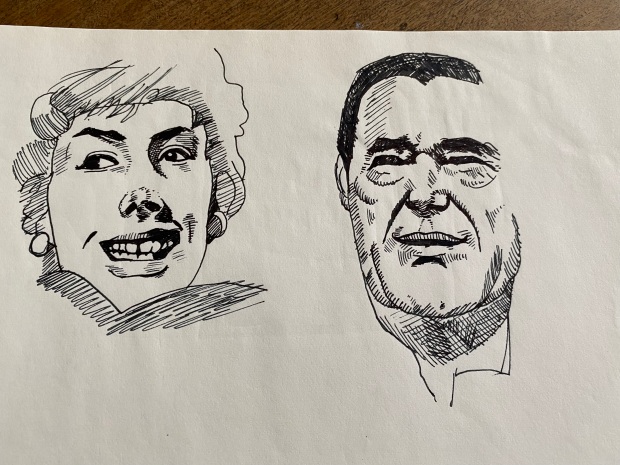
Maggie T.Clive JamesTed talking.Unknown actress and Captain Bob.
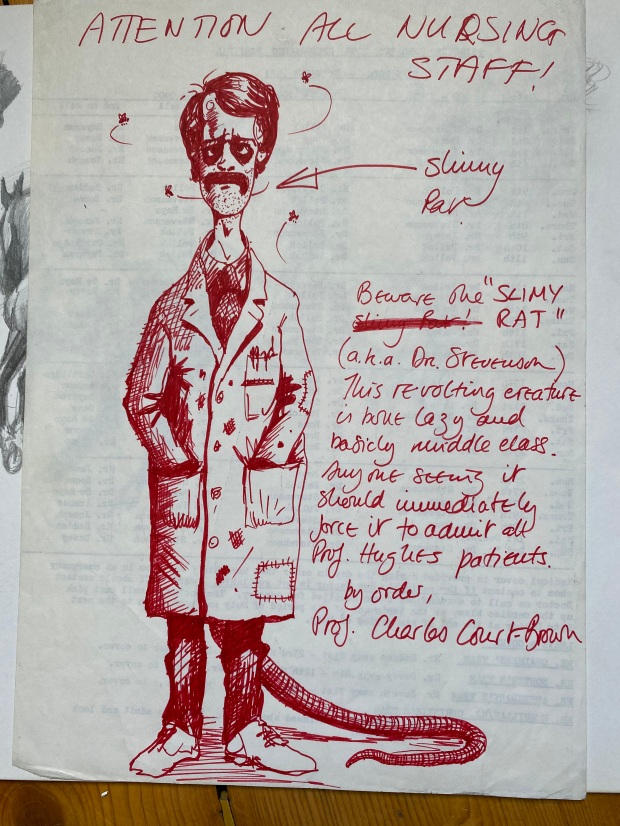
Once qualified, I started my house officer jobs. I had experienced a very stressful student locum on a general surgical unit and (despite my hands) had no desire to become a surgeon. I took one of the less popular posts in orthopaedic surgery just to get that part of the preregistration year out of the way. I spent two months at the Princess Margaret Rose Orthopaedic Hospital, Fairmilehead. My responsibilities were confined to the wards that had been allocated to me and did not include other firms whose registrars were meant to clerk in their own patients. Despite this, one very well-spoken registrar tried to get me to admit the professor’s patients. I refused, whereupon he called me ‘a slimy rat’ and stalked off in the huff.
On call that night and bored, I decided to depict the ‘slimy rat’ that I had become. An Australian registrar looked at my drawing and asked if he could have it for a few minutes. It turned out he was not a fan of my antagonist. Unknown to me, he photocopied my drawing and pinned it up on various noticeboards throughout the hospital.
The next morning I was confused to encounter various paramedical staff expressing their sympathy for the awful thing that Mr Court-Brown had done to me. Once I spotted the copies of my masterpiece on the wall I realised that they assumed I had been the victim of a nasty prank. I felt a bit miffed that they thought CCB could have done the drawing. Irony is never easy to convey non-verbally.
Slimy Rat
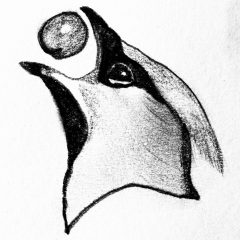
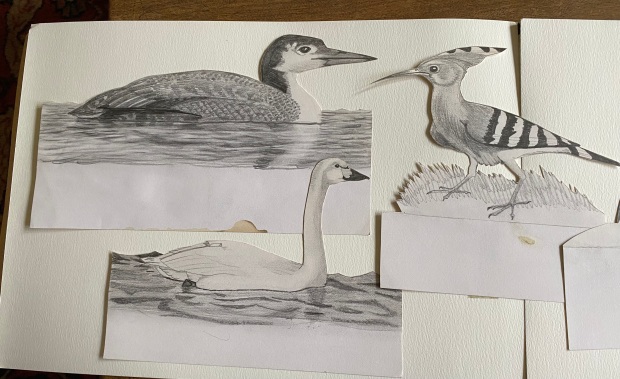
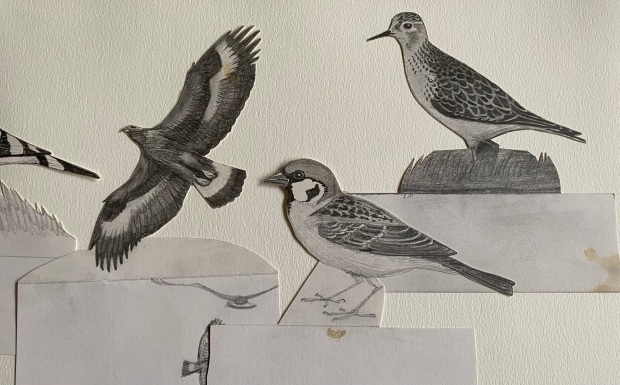
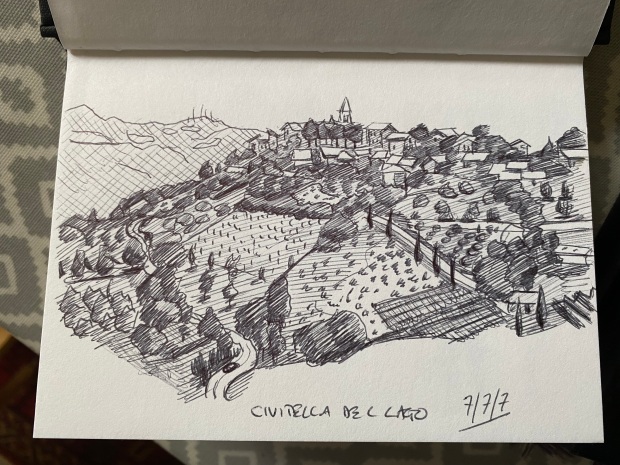
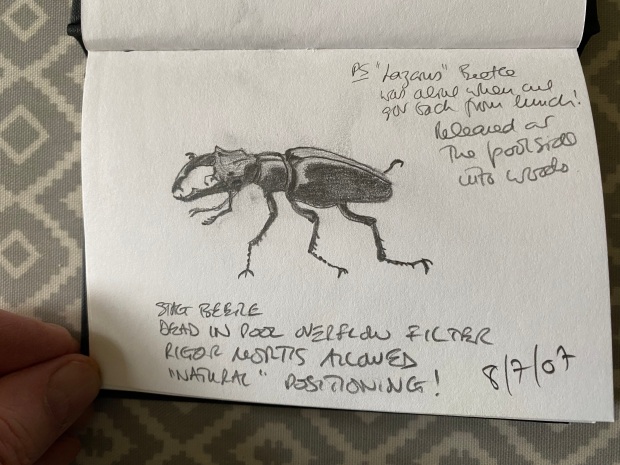
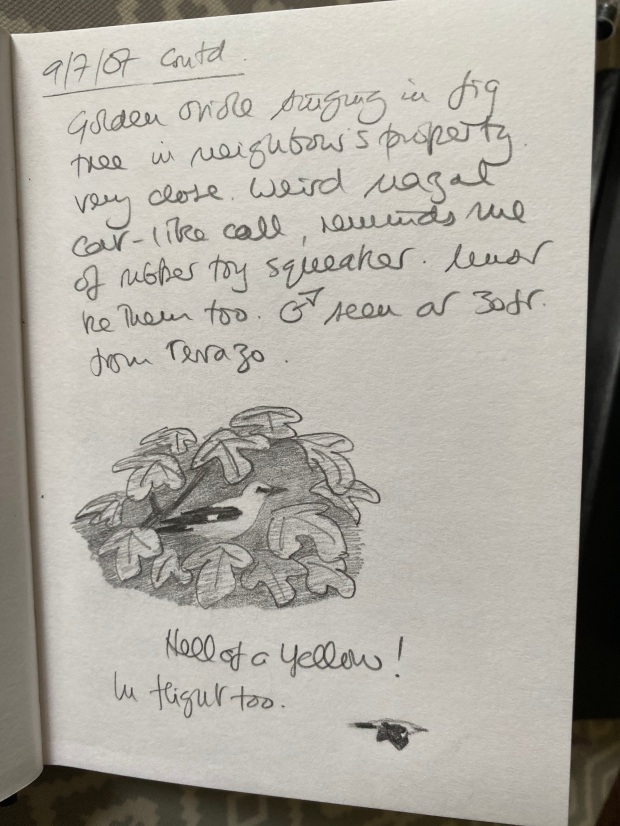
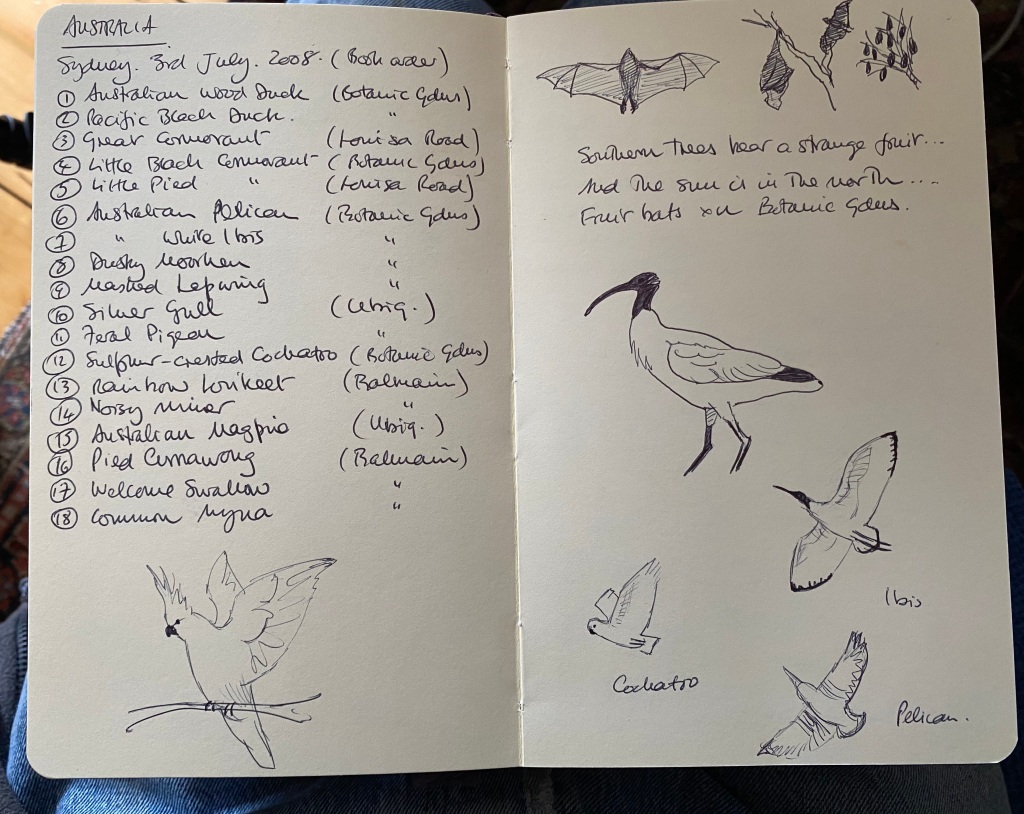
Despite her iron grip on my future, my mother failed to stop me hanging about with artists and musicians. I even married an artist. My interest in birds encouraged me to return to drawing later in life and I started recording the more interesting ones I’d seen. I would draw them, cut them out, and fold back the base so I could stand them up on my bookshelves. I also took a small drawing book with me on holidays and birding trips.
Great Northern Diver, Bewick Swan, Hoopoe.Juvenile Golden Eagle, Tree Sparrow, Buff-breasted Sandpiper.Umbria 07/07/07Stag partyGolden Oriole.Australia
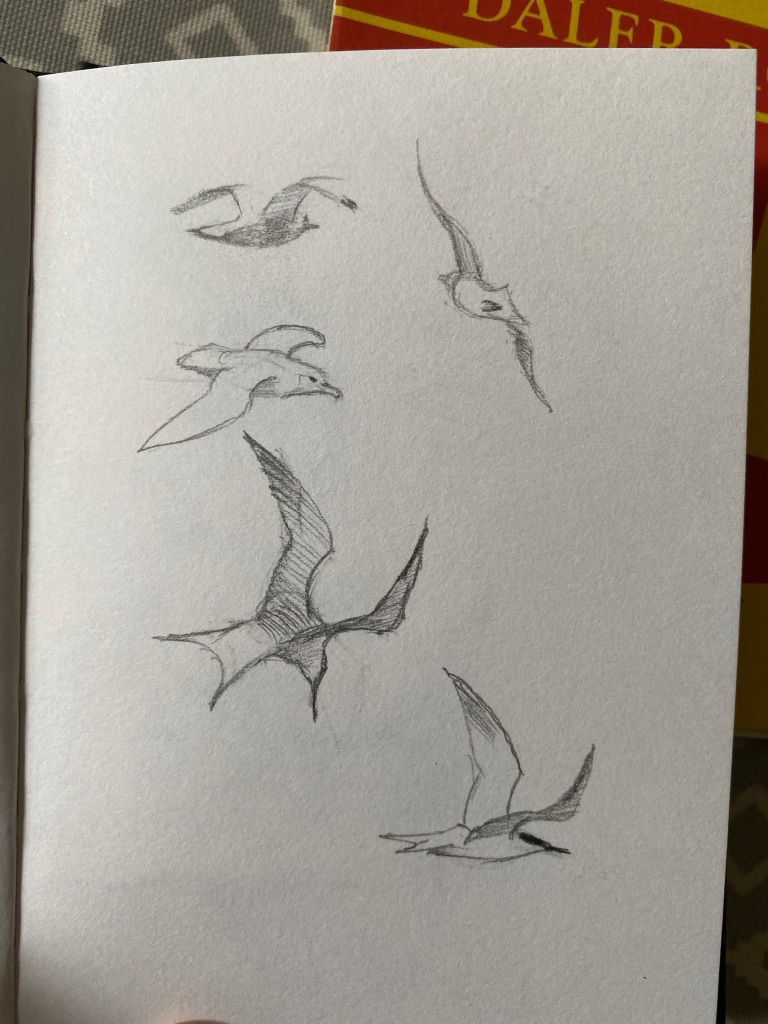
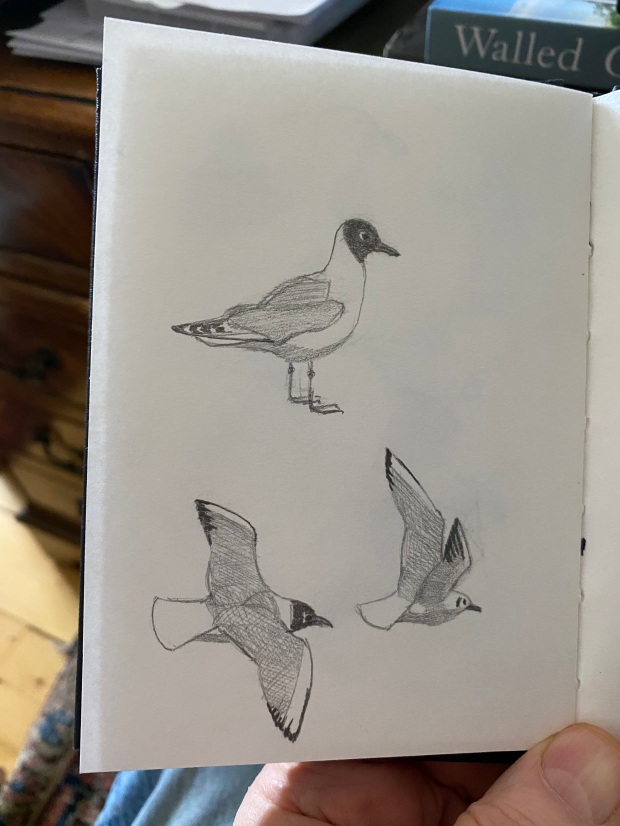
At work and bored in meetings and lectures, I continued doodling. Birds in flight were my favourite subject. I really like watching gulls, birds that many people detest but which are masters of their element and endlessly graceful in form and movement. The complex structure of their wings from different angles is a delightful challenge.
Three gulls and a couple of terns. Black-headed gull plumages.
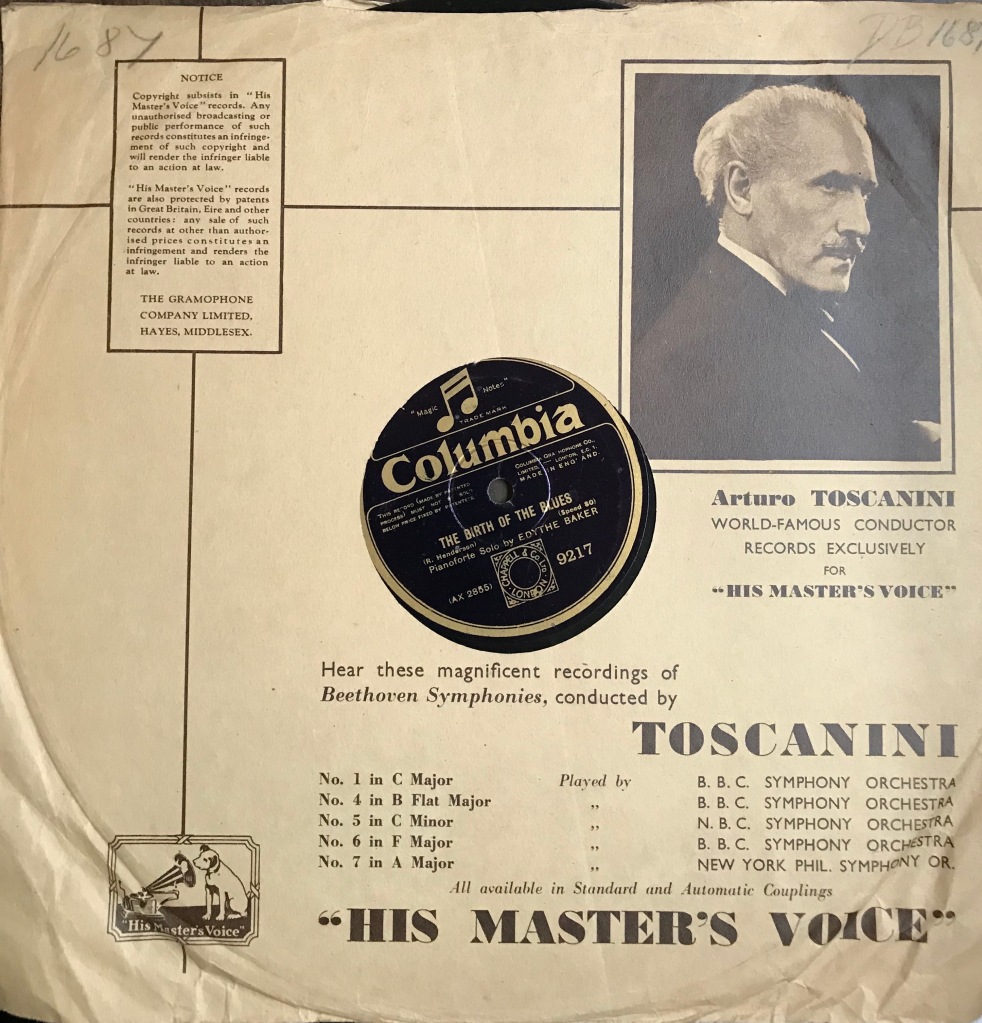
My dad had a huge collection of shellac 78 rpm records. He kept the classical ones away from us, but allowed us play the popular stuff. In retrospect this was a misjudgement. The pops were much more interesting than Arturo Toscanini, and we broke them. Nevertheless, we have many intact survivors from Dad’s collection stored in smart carrying cases. He must have bought new records every week. Having broken a 78, the only thing you could do was tape up the side you didn’t like and try listening to the other side through the horrible clicks – but basically nothing would fix a broken 78.
Incongruent Arturo enclosing The Birth Of The Blues. His daughter married Vladimir Horowitz.
Focal damage might produce the classic repetitive backward jump to the preceding groove, but this seems to be more a feature of scratched 33 rpm vinyl discs. I’m a bit surprised that the phrase ‘the needle’s stuck,’ referring to someone’s repetitive conversational traits, is still around today. Not for much longer, I suspect. ‘The CD’s jumping’ doesn’t have the same ring. CDs are disappearing anyway as vinyl makes a comeback – and digital sound files just randomly drop out leaving one of those buffering things going round and round.
I suppose ‘such phrases ‘the needle’s stuck’ is no different from other metaphors still in use that are based on long abandoned pastimes or occupations. Saying someone is ‘a loose cannon’ refers to naval battles where a gun, which should be an asset, breaks free of its moorings and rolls about the deck maiming your own men. Other phrases have drifted in meaning. Saying ‘the sun is over the yardarm’ has become an excuse for evening drinks. In fact, the Royal Navy dispensed the first tot of rum at noon – when the sun was at its zenith and over the yardarm. By the way, there really is a website called C.A.N.O.E. (Campaign to Ascribe a Nautical Origin to Everything). You can look it up.
Anyway, back to records. The needles for playing 78 records came in a little tin box. You fitted a new needle into the head of the armature when the old one got blunt and the sound quality became noticeably fuzzy. A metal pole in the middle of the turntable allowed you to stack up several records so that they dropped sequentially onto the velvet-covered platter below. I was never sure how that mechanism prevented the whole lot from dropping down at once. 78 rpm is quite fast, and as a new one dropped it would skid slightly on the one below.
The record player as a whole was actually a piece of varnished wooden furniture. The workings were accessed by pulling down a convex door in the top by its black bakelite handle. This brought the turntable out into position. Underneath this deck compartment were doors to cupboards for storing a few records. Later, Dad bought a teak Bang and Olufsen ‘stereogram’ with a Garrard deck and we were launched into the world of vinyl. The stereo LPs had a rainbow coloured ring around the label.
I really liked Jimmy Shand’s Scottish country dance numbers. As a very small child, after breaking Shand’s recording of Loch Lomond, I picked up the black phone that I knew connected the house automatically to the business’ office in town. Martha, the office manager, answered and I asked her to get me a new record. Amused, and wishing to stall, she asked me where she should get the money from for a new record. I told her to ‘take it out of petty cash,’ a phrase I’d heard my father use.
My particular favourites were popular songs from the Thirties like Louis Armstrong’s 1938 Jeepers Creepers. At the time I had no idea how such music was structured. When my mother wasn’t worried about me getting into bad company she worried about me developing bad habits. This included playing popular music by ear. My obvious interest and enjoyment of plonking on any available piano led my parents to buy a piano and arrange ‘proper’ music lessons.
I was sent to a sadistic music teacher. His room was cold in winter and smelled funny. He would sit with his hands tucked down behind the lukewarm radiator while my fingers went white, then blue. After sitting grade one theory and playing through all the levels of practical difficulty, I stopped piano lessons to study for my O Levels. I never went back. At the time, the specks and spots on the stave seemed to bear no relationship to the sounds I could produce by experimentation. It would be many years before they did.
I started playing the piano by ear in D major. This was not planned. These were simply the notes I picked at random while trying to work out the theme for Z Cars. I could only play the top line at first – I had no idea that chords and key changes underlie all melodies. After that I got very interested in swing music. It sounded good to me. On a Thursday night the ‘Light Programme’ (later Radio 2) broadcast an hour of swing from the Big Band Era – which wasn’t all that long ago then. I recorded the shows on a reel-to-reel tape recorder using an air microphone and listened to it many times over the following week. When the next show came along I recorded over the previous one as we only had the one tape. It was annoying when noises off from the rest of the house intruded. I became familiar with Benny Goodman, Duke Ellington, Count Basie, Glenn Miller, Chick Webb, Tommy Dorsey, Artie Shaw… and their soloists. The only serious big band I ever heard live was a concert by the Pasadena Roof Orchestra in Leith Town Hall when I was a student. The band dressed in period Twenties outfits and played stuff from the decade before my true era of interest. Me And Jane In A Plane was a poor substitute for Cottontail.
Swing music often used a ‘riff’, a musical phrase repeated with minor alterations over key changes. This structure referenced the origins of the genre in the blues and led me to explore blues as a simpler, more accessible, starting point. I started working things out for both hands on the piano. It became such an obsession that my mother would sometimes lock the piano to force me to do other stuff like homework. Pretty soon I could knock out a repetitive left handed bass while doing my best to add some top line fireworks with my right.
My interest in jazz was noted by the sadistic music teacher and he asked me to give a talk to an openly hostile group of my sixth year contemporaries who more interested in the Rolling Stones than Dave Brubeck. (He was my hero at the time – a farm boy and musical genius.). I could play the first page or so of several numbers and I explained how Brubeck used unusual time signatures (beats to the bar) like 5/4 (Take Five) or 9/8 (Blue Rondo A La Turk) and even 3/4 in the right hand and a 4/4 ragtime left hand bass as in It’s A Raggy Waltz. Most tricky of all was the phenomenal Unsquare Dance in the ridiculous time signature of 7/4. You can hear the drummer Joe Morello laughing in relief at the end of that track.
All this information was received in stony silence by my audience. I got so nervous my hands shook too much to cue the stylus cleanly onto the tracks I was using as illustrations. The jumping and skidding added to the tension. ‘That’s just noise, Stevie.’ said one sullen classmate. ‘Well it helps if you understand it,’ I offered. ‘I don’t want to understand it, I want to enjoy it,’ he said.
If you don’t have a working knowledge of musical theory or interest in developing one, the following bits and pieces may be of limited value!
Changes and Voicings.
In blues and jazz the ‘changes’ are the sequence of keys that lie behind a melody while ‘voicings’ are the harmonic structures of the individual chords of those keys. A chord is a group of notes played simultaneously for their combined effect. Changes and voicings lie behind the melody line that we hear or sing and the whole thing is played in a specific rhythm or number of beats to the bar. A time signature will specify the number of beats to the bar (the top number) and the length of those beats (the bottom number) – usually crotchets or quavers, i.e. 4 or 8. I worked out that the blues used three basic chord changes over a 12 bar verse in 4/4 time. Usually a blues will be in a major key but there are minor blues tunes as well (The Thrill Is Gone, Black Magic Woman, Green Onions).
The first chord of a blues is usually the major triad built on the tonic or root note, and sets the key the blues tune is written in, for example, C major. It is the start and finish point of every verse. There is a system that allocates a roman numeral to each chord in any key. Using this notation you can transpose any tune to another key because the keys and chord structure represented by these numerals remains the same.
The root chord is I. After four bars, the first change of key is to the major chord a fourth interval above the tonic (chord IV, aka the subdominant). In C this would be a change from C to F major and it lasts for two bars. The tune then returns to the root chord (I) for two bars before moving finally to the major chord a fifth interval above the tonic (V, aka the dominant). In C major this would be the key of G major. The subdominant gives you a feeling of progression whilst the dominant compels you back to the root chord. The opening riff of a blues melody is usually repeated in the subdominant with a final, different melodic line, in the dominant section.
|C | | | |F | |C | |G | |C | | = 12 bars
To make things more interesting the structure can be made more complex. In ‘quick change blues’ you put in an extra change to IV in bar 2 then back to I for two bars before returning to IV again. At the end of the verse you can return to I from V via another bar in IV.
|C |F |C | |F | |C | |G |F |C | |
Three changes in major chords is a bit simple, so the next issue to consider is the transition between these changes. Adding a dominant 7th chord in the tonic key leads you naturally up to the subdominant. An augmented (sharpened) 5th also works in some songs. For an even more sophisticated sound ‘fills’ are inserted to occupy the spaces between changes. These are transient detours into other chords, and can be as complicated as you like. They are particularly useful in jazz standards when transitioning to and from ‘the bridge’ (see below). Our quick change 12 bar blues pimped up could now read:
It became clear to me that the ‘sharp’ keys; D, A, E, B and F# were not easy for a pianist to work in, especially when attempting boogie-woogie. I am heavily right-handed so anything that makes it easier to execute the complicated business required of the left hand is a big help. For this reason I soon dumped D major and went for C and G instead. By ‘sharp’ keys I mean those that have sharps in their key signatures. The ‘flat’ keys – F, Bb, Eb, Ab, Db and Gb – suit the brass and wind instruments which dominate jazz, particularly the saxophone. These instruments are easier to play in the flat keys, in fact it’s the equivalent of C major on the piano. This usually mystifies guitarists when they play with a brass section.
Jazz tunes generally use ‘cycles of fourths’ rather than the tonic, subdominant, dominant system of a blues. In the flat keys this often takes you to minor keys that are relatively easy to play on the piano – such as the minor keys of C, G and F. In this, pianists and brass players are allies.
Sharp keys made an unwelcome return later in life when I began playing rock music with guitarists. Playing guitar without using a capo is much easier in these sharp keys because strings can be left open rather than using more difficult barre chords. I can play some very basic guitar myself which helps me work out what key we are in by watching the guitarists’ hands. Playing piano in these keys is not impossible, but complicated manoeuvres become tricky. It can limit your vocabulary, making it difficult to shine on your solos. Alternatively, a blues in, say, E can have a unique sound determined by these technical parameters. Ray Charles’ What’d I Say? in E major is an example of this. Meantime, in my early keyboard experiments, I dropped a tone from D to the ‘people’s key’ of C with its boring lack of any black notes in its basic scale.
Blues
I realised that only certain notes in a blues melody sound ‘correct.’ On a piano notes can’t be ‘bent’ the way they can on a stringed instrument. As Thelonious Monk said, ‘There are no wrong notes on a piano.’ But you can slur ‘accidental’ notes into chords to simulate that. An accidental is written as a little note preceding the main chord. When playing blues, a major seventh, the chord that includes the seventh note in the major scale, a semitone below the top do, does not sound right at all, but the minor seventh interval, a full tone below the top do, occurs all the time. When a minor seventh is added to the major triad you have what is called a ‘dominant seventh’ which is used throughout blues and rock music. Similarly, minor thirds feature a lot. In C major these intervals correspond to two ‘black’ notes (Bb and Eb). These are the ‘blue notes’. In contrast to this, major sevenths and other exotica are ubiquitous in jazz music.
As mentioned above, additional chords are inserted into a 12 bar blues to make the changes more interesting. The dominant seventh chord is used to move from the tonic to the subdominant. One of the most jarring intervals in music is the flattened fifth or tritone. This interval is exactly half way between the notes at the top and bottom of an octave consisting of 12 semitones. In C major this would be F# (aka Gb). Interestingly, the dominant seventh chord actually contains a tritone between the second note, a major third, and the fourth note, a minor seventh. In C this is the interval between E and Bb. This chord creates an internal tension that wants to resolve itself to the major chord a fourth above, the subdominant. In the case of C major, C7 goes to F. In addition, when you shift the melody up to the subdominant, a minor third in the tonic key becomes a blue note minor seventh in the new key, allowing you to play a tonic minor chord over the subdominant. In the case of C major, a C minor chord on top of F – a dominant ninth; F9. In swing music and boogie-woogie a sixth interval (e.g. adding in an A to a C major chord) is used a lot. Especially by Albert Ammons, Meade Lux Lewis and Glen Miller!
Jazz Standards
Obviously, not all music is blues and eventually I began exploring other things. A lot of folk music also seemed to be built on subdominant and dominant chords – only in completely different sequences. As already mentioned, to make the changes applicable to any key, the various chords that can be made from the notes of the diatonic scale can be given roman numerals. ‘I’ is the base key, ‘IV’ the subdominant a fourth above and ‘V’ the dominant. These are all major keys in terms of the first three notes (a major triad). Adding a fourth note to the triad using the other notes of the diatonic scale produces some very non-bluesy chords. I and IV become major sevenths while V is a dominant seventh. II, III and VI are all minor seventh chords and VII is something very peculiar that turns out to be a half-diminished chord, a sort of minor seventh chord with a diminished fifth instead of a perfect fifth. These chords are all widely used in jazz. You can test this stuff if you have a keyboard.
Chords can be enriched satisfactorily by going further up the scale and adding ninths, elevenths and even thirteenths on top, while flattened fifths and ninths occupy strange territories all of their own.
As I moved from blues to working out jazz tunes, I realised all sorts of new changes were possible. In particular, a cycle of fourths starting on the III chord: III VI II V I. The change from a minor key like Dm7 to the major a fourth above (G7) is pleasant to the ear. You could even do VII III VI II V I.
It was years before I realised why minor tunes were written with the key signature of the major key a minor third above it. For example, Cm tunes are written in the same key signature as Eb major. This is because the notes of the C minor scale correspond to the flattened notes in Eb. Cm is therefore the related minor of Eb major. Am is in a similar relationship with C and the scales of those two keys require no sharps or flats at all.
Such relationships are used in popular tunes. The common structure of a jazz standard spans 32 bars consisting of an eight-bar theme (the head) which is then repeated, followed by a middle eight bars in a different key before returning to the theme for the last time; an AABA pattern. A is confusingly referred to as the ‘chorus’ by jazz musicians and B as ‘the bridge’ or middle eight. Melodies can start in a minor key then modulate to the related major – or vice versa.
For example, in the wonderful Take Five written by Paul Desmond for the Dave Brubeck quartet, the key signature is the remote one of Gb containing an alarming six flats. The famous theme starts in the related Eb minor. The middle eight is in the indicated Gb major and starts on the IV chord of Gb major (Bmaj7). It then moves through a cycle of mainly minor keys to Gb. The first time round it stops in Gb but after the second time there is a lovely turnaround as the tune drops to Fsus4, then Bb7 which leads naturally back to Eb minor again.
Other songs do the opposite and start in the major then move to the related minor, for example Fats Waller’s Ain’t Misbehavin’. I play this in Eb, so the middle eight is in C minor. This is the song that introduced me to the concept of the ‘middle eight’ where a contrasting eight bars links two segments of the basic melody. The transitions between the major and minor segments are also intriguing. In moving from Eb to C minor you can use a D diminished chord then a G7.
To recap; I first thought the ‘flat keys’ like F, Bb, Eb and Ab would be difficult, but most jazz is written for wind instruments like the saxophone which have their easiest fingering in these keys. In addition, when playing standard tunes rather than blues the changes tend to go to convenient keys for the pianist. In Eb, VII III VI II and V translate to Dm Gm Cm Fm and Bb – which is all very straightforward. However, in the sharp keys these changes are extremely awkward. The equivalent changes in E major would be: D#m (Ebm) G#m (Abm) C#m (Dbm) F#m (Gbm) and B.
Example: Undecided (in C major):
This melody involves an enharmonic riff which uses the semitone interval between B and C. In the key of C this is a major seventh, and not a blues interval. In C, B natural is not a blue note. The key then changes up to F exactly as a blues would, but the riff stays the same, now oscillating between a diminished fifth and a fifth relative to F major. This is an example of an enharmonic melody, notes that have a different tonal value when they appear in the scale of another key. Next, the key changes to D7 and the melody is once again repeated over this chord changing the intervals to a sixth and a minor seventh relative to D. In each case the interval between the notes of the tune is a semitone. In the last two bars the key changes to Dm then rapidly to Ab and G7 before returning to C. The two chorus sections are linked by a two bar fill, C Am7 Dm7 G7. Then comes the middle eight: Gm7 alternates with C7 then we move up to F for two bars. Am7 alternates with D7 then up to G7 for two bars, which leads us back to the original riff in C for the final chorus.
Here is a young Ella Fitzgerald taking a languid approach to the piece with the peerless Chick Webb Orchestra.
There was once a ‘battle of the bands’ between the Chick Webb and Benny Goodman outfits. The bands were given the same scores and a curtain concealed their identity from the audience who were then asked to vote. Webb won hands down. He used to hit the drums so hard that they had to be screwed to the floor. Diminutive in stature, he suffered from spinal TB. It was Webb who discovered the teenage Fitzgerald. He succumbed to his disease in hospital with Ella by his side. Apparently he suddenly sat up in bed, said, ‘Gotta go,’ then died.
Here is the same melody and chords in the punning Decidedly by Thelonious Monk and Gerry Mulligan:
It is common practice in jazz to jazz a number on the changes of a standard popular song. Sometimes this is to disguise the tune for copyright reasons. See under How High The Moon and Charlie Parker’s Ornithology or Cherokee and Ko-Ko. Miles Davis declined to play on Ko-Ko as he felt unable to acquit himself well playing that fast.
Straight No Chaser – an example of alternative blues chords:
The key a number is written in influences how it can be played. On the piano the notes fall in specific structural ways in different keys. The fingering of a melody in F is completely different from the same melody payed in E. Following on from the technical difficulties of playing tunes in awkward keys is the concept of pitch. While working things out by ear, I noticed that songs only sound ‘right’ in their correct keys. Take Five (Eb minor) does not sound right if you transpose it to E minor. The question is, do the different keys have a truly distinctive character or are we just detecting the pitch as being the ‘right’ key.
Absolute or perfect pitch is the ability to identify and reproduce a note without ‘hunting’ for it. Ludwig Wittgenstein had perfect pitch and he and his brother Paul could identify the pitch of the tram bells passing by their palatial house in Vienna. Paul became a one-armed concert pianist after he was wounded in the First World War. Famous composers wrote left-handed solo piano pieces and concertos for him. He then enraged his generous admirers by rewriting their music! Three of Ludwig’s four brothers committed suicide, so maybe extreme musical talent is a bit of a burden. Those Wittgensteins eh?
I remember a story from a documentary about Vladimir Horowitz who suffered from recurrent prolonged bouts of depression and stage fright. At one point he was returning to the concert platform after an absence of two years. When he began his first piece he was perplexed to find it so difficult. Half-way through he realised he was playing it in the wrong key. The idea that you might be able to transpose a very difficult classical piece to a different key, requiring different fingering, and not realise you were doing that, indicates a depth of musical ability that is bewildering. A central nervous system from another planet.
It is popular to contend that we are all capable of great things. If you get beyond the basic level with any instrument, non-musicians will start saying you should give up the day job. I came to realise, as my progress inevitably slowed, that no matter how long and hard I practised I would never match a classical pianist or a professional jazz player. It is only by gaining some competence as an amateur musician that you can fully appreciate the geniuses among us.
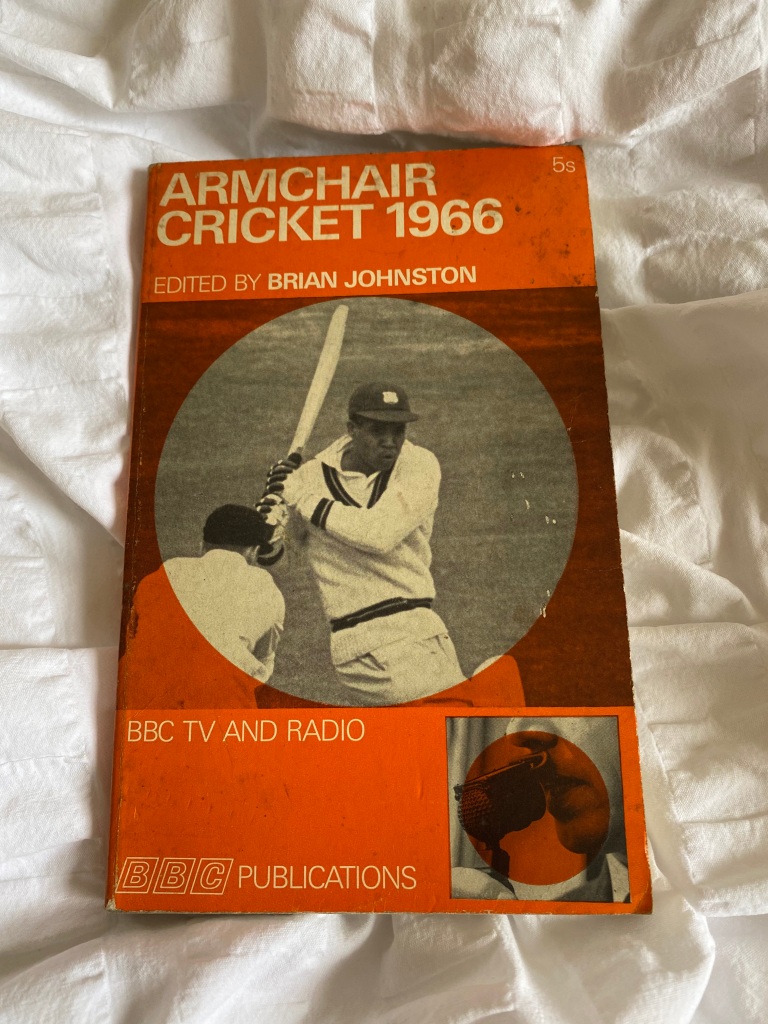
I have no idea where my affection for cricket came from. I have always found it easier to hit balls with a bat or a racquet than to kick them, so maybe that’s the reason. Cricket is played by more people in Scotland than play rugby – but obviously both have always been less popular than football. There are localised hot spots in the far north east around the Moray Firth and the more expected, Fife, Lothian and Borders. On my side of the country there was something called the Western League. Like rugby, my introduction to the sport was on BBC black-and-white TV broadcasts in the 1960s. I’m sure England were playing test matches against other countries, but it was the West Indies that dominated my imagination and now, my memory.
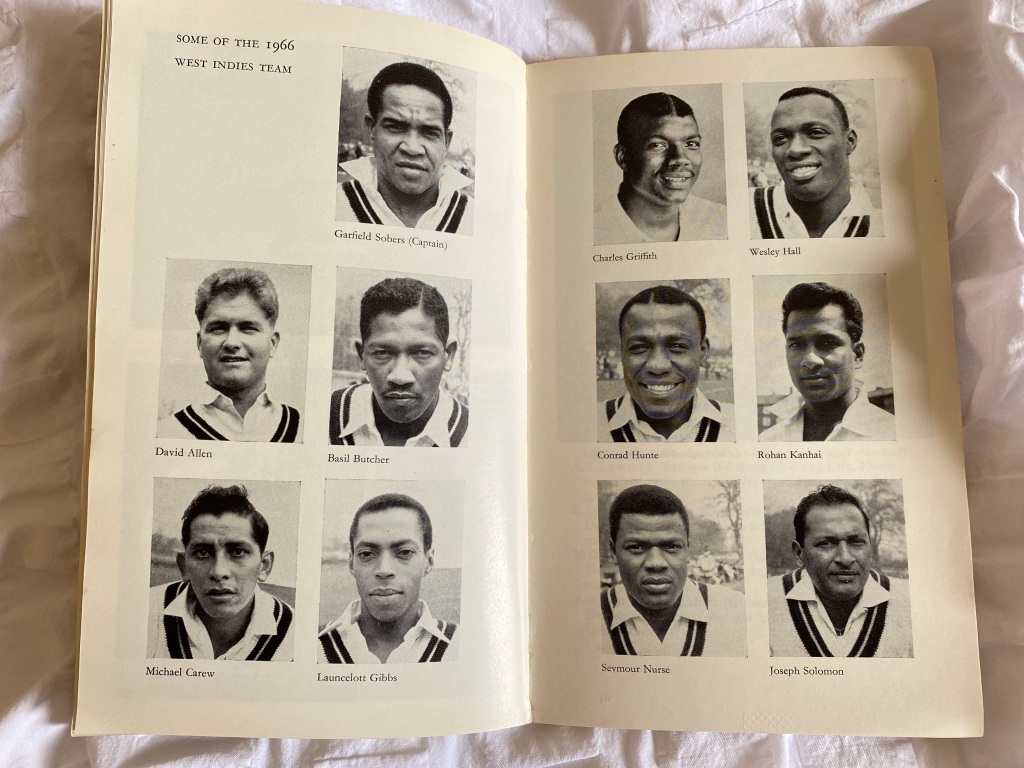
England had Geoff Boycott, Colin Cowdrey, John Edrich, Ted Dexter, Tom Graveney, Ken Barrington, John Snow, Derek Underwood and Ray Illingworth; but the West Indies had Wes Hall, Charlie Griffith, Lance Gibbs, Clive Lloyd – and Garfield Sobers. Lloyd and Sobers were my heroes. Lloyd for his astonishing cover fielding and Sobers for everything. I even turned up my collar and tried imitating his bowling style. Hall and Griffiths had murderous pace and I can remember the Charlie Griffith bouncer that felled ‘Deadly’ Derek Underwood on his debut and left him with a large haematoma on his forehead. It seemed shockingly unsportsmanlike at the time.
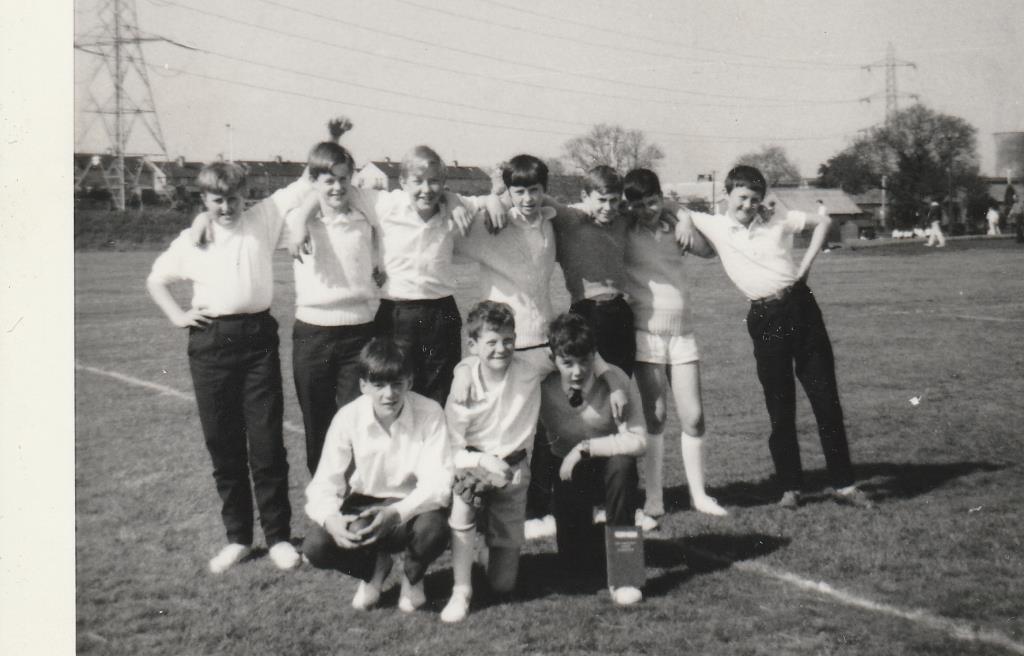
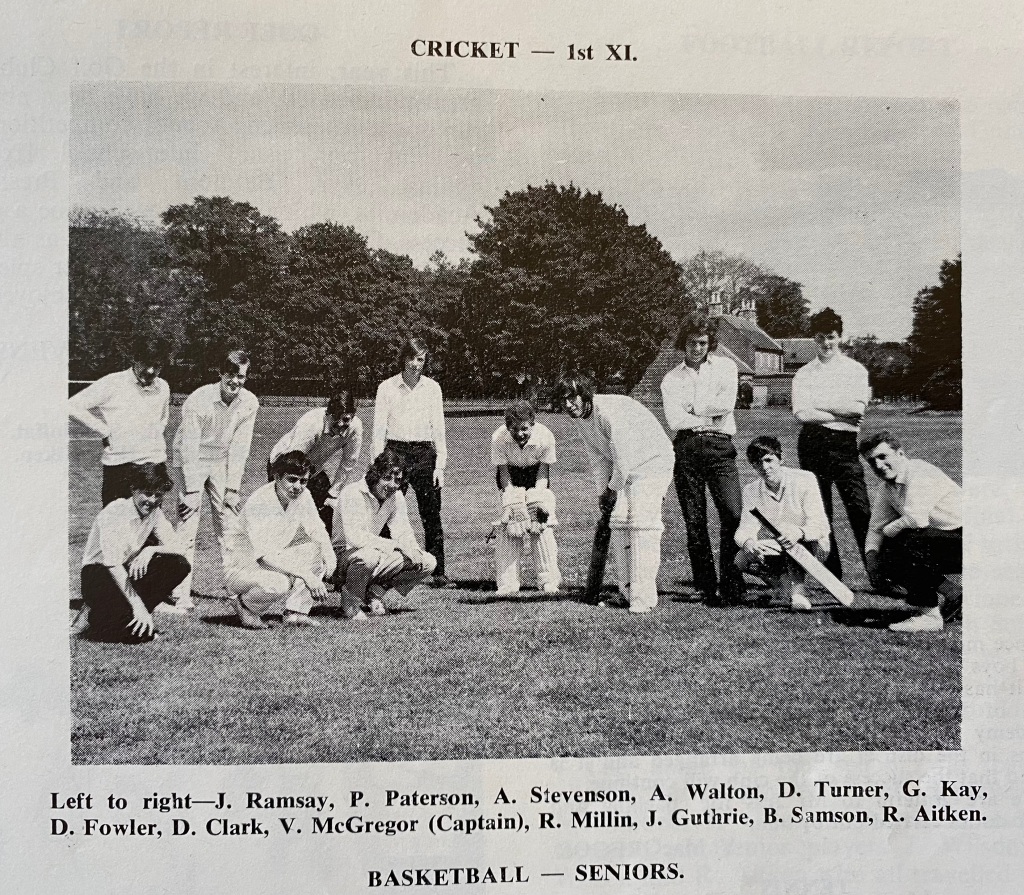
At secondary school I finally got to play. The standard of kit was appalling, consisting of ancient bats and pads in disintegrating bags. The balls were scuffed into complete anonymity. We were coached by Mr Moffat, who was South African, and later Mr Steinlett who was English. Both of them had played at quite a high level and the team owed its existence to their enthusiasm and commitment.
Mr Moffat taught English and was balding, cerebral and Christian. We seemed terrible unrefined compared to him. Harry Kirkwood, the class’s roughest diamond, enjoyed chewing gum during lessons. ‘Harry! Are you masticating?’ asked Mr Moffat. Harry, bewildered, glanced down at his lap. ‘Me sir? No sir.’
Mr Steinlett was more worldly wise and droll and had played cricket in leagues in the north of England. ‘I once bit myself on the arse, Stevenson,’ he told me as we were preparing for the teachers versus pupils match. As he expected, I was intrigued. ‘OK, how did that happen?’ I asked. Having hooked his fish, he replied, ‘I have a partial denture and I put it in my back pocket for safety during a match. I was fielding at long on and the batsman went for a six. I was back-pedalling to catch it, tripped over the boundary rope and landed on my backside.’
Our pitches were terrible. They were used heavily for football during the winter and the school had nothing resembling a cricket groundsman to effect any kind of repairs for the summer game. The bounce was unplayable, in fact dangerous, and we were reduced to playing all our official matches away from home. The contrast with teams like Ayr Academy, who had a beautiful ground at Doonfoot and were coached by a West Indian professional, was embarrassing. We didn’t even have proper whites or, occasionally, enough willing participants to make up a full eleven. The carpet-like perfection of Ayr’s pitch was a wonder.
The school ran a first and second year team, but from third year onwards there were just first and second elevens to play for. Due to my enthusiasm rather than any ability, I was captain in first and second year. Our abysmal record was the subject of amusement and some derision at school. In the bus on the way home from matches my own team would sing, ‘We want Stevie with a rope around his neck and six feet off the ground!’
Still, we did our best and it soon became clear that cricket was not a game for softies. A cricket ball weighs nearly 6oz and travels at over 100mph when struck. After being hit in the face during a practice, one of our team sustained a detached retina and never came back. During one match, hoping for a catch, I moved our best batsman to short leg. The intended victim promptly smashed one straight onto his knee cap. Our man was carried off. As an enthusiast I was drafted into the first eleven from third year onwards despite being 3 years younger than most of the team. In my fist season we played Kilmarnock Academy. One of their sixth year boys was already playing with seniors in the Western League .
I was simply making up the numbers at this stage, filling unimportant fielding positions and going out to bat well down the order. The Western League boy was bowling when I reached the crease. He was a huge mesomorphic redhead with a hairy chest visible through his partly-undone shirt. I’d never seen anyone take such a long run-up before. He marched off towards the sight screen furiously polishing the ball as I took my guard. ‘Middle and leg please,’ I said in a faint voice. ‘That is,’ said the umpire. The ginger monster turned at his mark and came charging in.
If you’ve never played cricket you will be unaware that the seam on the ball makes a faint noise as it spins. The delivery was travelling so fast I was completely unable to see the thing – but I could hear it buzz past. I made a vague gesture at where I thought it might be, made no contact, and heard it smack into the wicket keeper’s gloves an instant later. All the close fielders ooh-ed and ah-ed to let me know what a close call I’d had. The second delivery went the same way. The third was short and reared up striking me a glancing blow on my right cheek. Later, a bruise came up bearing the imprint of the stitching on the seam. By this time I was in fear of my life. Needless to say in 1969 we wore no helmets. The fourth delivery was a blessed relief. It pitched on a length, went through the gap, and stumps and bails flew in all directions. The close fielders roared their approval and I trudged back to the pavilion wondering if it would be sensible to give up cricket.
Later that season we played Ayr Academy. Again, I was filling gaps in the field and the batting order. The captain put me at square leg just forward of the umpire. The Ayr captain was having a great knock. Suddenly, he smote one on the leg side about six feet off the deck. These things are purely a matter of reaction, and with no time to think, I flew to my right and caught the ball in mid air at full stretch, landing face-down at the umpire’s feet. He signalled that the batsman was out.
My batting contribution that day was another duck and I was a bit down at the post-match cup of tea in Belleisle Park’s imposing mansion house hotel. ‘Never mind,’ said our coach. ‘Today you took a catch you’ll remember for the rest of your days.’
Eventually in sixth year I captained the firsts – such as we were. My batting continued to disappoint but I was a reasonable medium pace bowler. Against Kilmarnock that year I was getting the treatment from their number four and became very frustrated. In desperation I bowled him a full toss. He attempted a hook, but mis-timed it and the half-struck ball came straight back at me for a catch. My momentary joy was dispelled as the ball struck me right on the end of my left index finger and I dropped him. The finger rapidly swelled up into a purple sausage.
I thought I wouldn’t be able to bat, but Kilmarnock went through our order very quickly and I gingerly pulled on my gloves and went out. I wasn’t able to grip the handle firmly with my injured hand. The first delivery reared up and struck me directly on my fat blue finger. The pain was exquisite. Not a game for softies.
I alluded to George Burley (footballer: Ipswich and Scotland) in my piece on rugby. He was two years younger than me and an age group international footballer. In the summer term of my sixth year he decided he wanted to have a go at cricket and turned up for a net in the gymnasium. By this time I felt I could bowl a bit and was skeptical that a complete novice could be competent against an experienced bowler. George picked up the bat and asked me if he was holding it properly. I said yes, he was. He then took up a very professional-looking stance and gazed back at me at the bowler’s end. I began bowling at him as fast and as accurately as I could. With effortless ease he smashed every ball away as if I was sending down underarm lobs at beach cricket. Great sportsmen can turn their hand to anything and are literally in a different league from the also-rans.
My best innings ever was against the teachers – 26 not-out I believe. That match was held at the end of summer term when our meagre numbers had dwindled and some of my batting partners had had to go in twice. I never played again apart from one scratch student match on the Meadows. I clean-bowled my opponent on the first delivery with a full-toss, but the others said that wasn’t fair and he should stay at the wicket. I was told not to bowl any more balls like that.
In 1975 I travelled to Glasgow to see Cowdrey and Denness play at West of Scotland in a benefit for Salahudin. Intikhab Alam, Majid Khan, Asif Iqbal – and Sir Garfield Sobers were also playing. It’s the only time I’ve watched First Class cricketers in action. It was a lovely day and the crowd were excited to see the ageing Cowdrey in action. By this time he was noticeably portly. Acknowledging his warm reception, he cheerfully took his stance and began clipping every delivery to the boundary in an exhibition of matchless class. He needed the merest gesture towards the ball to send it flying to the ropes. What a great sport it is when an overweight forty-something can play like that at the highest level!
In 1981 I was a medical registrar in Dunfermline when Ian Botham (assisted by Gatting, Gower and Willis) had his miracle test series against Australia and the combined attack of Lawson (briefly) and Lillee. We watched as much as we could on the mess TV between clinics, eating and getting bleeped. Botham rescued the series when England were 0-1 down and his ability to swat bouncers over the boundary, seemingly without looking, was astonishing.
After that, my interest in cricket waned and I lost touch with the sport, but the smell of cut grass or linseed oil brings it all back. I don’t think the shortened game is very appealing, aimed as it is at people with a short attention span and no appreciation of the subtleties of a sporting engagement that can last five days.
 The Bohemian Waxwing